Keep the cash flowing – Westpac cashflow guide

posted on

A guide to improving cash flow in your business

Where’s your cash going?

Cash flow is the money coming in and out of your business – having more cash on hand helps the business thrive and grow.

Healthy cash flow is vital to any successful business. When the cash is flowing, you’ll thrive. Run out of cash though, and you may struggle. Cash flow is a constant worry for owners of smallto-medium-sized businesses, and problems with cash flow can be the biggest obstacle for survival and growth. Improve your cash flow and your business will be in better shape – that’s why Westpac have created this guide to provide you with some tips and insights into successful cash flow management.

Read this handy business cashflow guide to provide you with some tips and insights into successful cashflow management. Plus, you can find more ways to improve your cashflow here on the Westpac website here.


More information

As a proud partner of the Restaurant Association of New Zealand, Westpac provide members with support and benefits to help you meet your financial goals. Plus, Restaurant Association of New Zealand members can also benefit from preferential Westpac merchant rates. Find out more here.

Submission on the Health and Safety at Work Amendment Bill

posted on

March 2026

To the Education and Workforce Committee

  1. The Restaurant Association of New Zealand (the Restaurant Association) welcomes the opportunity to make a submission on the Health and Safety at Work Amendment Bill (the Bill).
  1. This submission is made on behalf of the Restaurant Association’s members, who are predominantly restaurant and café owners and operators across New Zealand. We are the representative body for more than 2,500 hospitality businesses, with more than 50,000 employees. Our membership spans the length and breadth of the country.
  1. The Restaurant Association is an employer organisation, representing specifically small PCBUs in the hospitality sector.
  1. Feedback we have gathered from our members directly informs this submission. We draw on that data throughout to ground our views in the actual experience of hospitality operators.
  1. The hospitality industry is characterised overwhelmingly by small businesses. The majority of our members employ 20 or fewer people, meaning the provisions directed at small PCBUs are directly and significantly relevant to our sector. We note that Statistics NZ data confirms 97% of all New Zealand businesses fall within the small business threshold proposed in this Bill — our members are the very businesses this reform is designed to assist.
  1. The Restaurant Association is supportive of the Bill’s direction. We support the development of a system that is easy to follow and low-cost for businesses, while retaining a high level of safety for employees and one that does not place disproportionate compliance burden on small hospitality businesses. We believe the Bill has genuine potential to address this — provided it is implemented with clear, sector-specific guidance and appropriate support for small business owners. The Restaurant Association considers that the success of these reforms will depend on the clarity, consistency, and practicality of implementation in practice.

  1. Understanding obligations: Around 92% of members say they understand their health and safety obligations quite well or very well. However, those who reported difficulty specifically requested industry-specific templates or guides — indicating that understanding the law in general terms is not the same as knowing how to apply it in a hospitality context. In response to this feedback, the Restaurant Association has developed its own Health and Safety programme to provide hospitality operators with clear, practical guidance tailored to their operating environment. This reflects our members’ need for resources that translate legal obligations into workable, day-to-day practices.
  1. Compliance costs: Annual compliance costs vary widely across our membership, with most paying between $5,000 and $10,000 per year. Given that most hospitality businesses are micro- or small-businesses, even the lower range is significant. Members also spend between one and ten hours per week on health and safety compliance activity.
  1. Specific frustrations with the current system include:
    • The “reasonably practicable” standard, which members often perceive as open-ended and exposing them to significant liability regardless of the reasonableness of their actions
    • Reporting and logging requirements that are time-consuming and disproportionate for small operators
    • Inconsistent interpretation of compliance requirements by different certifiers
    • A perceived imbalance in accountability, with owners bearing significant legal exposure even where employee or customer behaviour contributed to an incident
  1. Sources of guidance: When asked where they turn for health and safety information, our members ranked their sources in the following order: (1) industry associations, (2) third parties authorised by WorkSafe, (3) law or regulations, guidance, and health and safety advisors jointly, (4) word of mouth, and (5) WorkSafe directly. Only 15% had directly queried WorkSafe for guidance — suggesting the majority of the sector navigates obligations without direct regulator support.
  1. System objectives: When asked whether the system balances risks with costs, 75% of members say “probably no” or “definitely no”. When asked whether it is clear, 56% said “probably no” or “definitely no”. These results reflect genuine concern about both the proportionality and the clarity of the current framework for our sector.

  1. The Bill introduces a new category of “small PCBU” — a business or undertaking with fewer than 20 workers for at least nine of the preceding 12 months — and requires small PCBUs to focus their primary risk management duties on “critical risks”, while continuing to meet baseline worker welfare obligations (information, training, supervision, PPE, and welfare facilities such as first aid and washing facilities), and remaining subject to the overarching duty to ensure health and safety so far as is reasonably practicable.
  1. The Restaurant Association supports this reform.
  1. Some members say that the current system feels in practice as though a small café employing eight people has the same compliance expectations as a higher risk business. Members report that compliance expectations can feel overly complex, even if the legal standard is technically flexible. Members report a perception that regulators apply similar documentation or process expectations across very different business sizes.
  1. In addition, small businesses can misinterpret what “reasonably practicable” means for them, and may over-comply as a result, with some members reporting reliance on external consultants to provide reassurance on compliance (which comes at a cost to the business).
  1. We note the Bill’s definition of “critical risk” captures: (a) hazards already governed by high-risk regulatory regimes listed in Schedule 1A; and (b) any other hazard likely to result in death, a notifiable injury, illness or incident, or an occupational disease listed in the Accident Compensation Act 2001. In a hospitality context, this would typically capture higher-consequence hazards such as LPG gas systems, deep fryer and hot oil operations where there is potential for serious harm, and manual handling risks capable of causing significant injury — all of which our members already take seriously and manage actively.
  1. However, we have two concerns about implementation:
  2. The “worker” definition and the small PCBU threshold: We note that the definition of “worker” in the HSWA is intentionally broad, and includes not only employees but also contractors, subcontractors, and their employees. While this definition is well established, its interaction with the proposed 20-worker threshold for small PCBUs may create uncertainty in practice. Hospitality businesses may rely on a mix of permanent staff, casual workers, contractors for maintenance, and labour hire arrangements, often varying seasonally. It may not be clear in all cases how these different categories of workers should be counted toward the threshold. We ask the Committee to consider whether further clarity or guidance is needed on how the threshold is to be applied in these common scenarios. We also note the Bill clarifies that even for small PCBUs, the general duty to ensure health and safety “so far as is reasonably practicable” is not removed. This creates an important interaction between the overarching duty and the more specific focus on critical risks. We ask that the Bill and accompanying guidance provide sufficient clarity on how these duties are intended to operate together in practice, so that small business owner-operators can make confident, informed decisions about their obligations.
  3. Identifying critical risks in practice: Small PCBUs will need to assess which hazards in their workplace meet the “critical risk” threshold. Hospitality operators are generally very familiar with the hazards in their workplaces — such as hot surfaces, sharp knives, and slips and falls — and actively manage them. However, it may not always be clear how to determine which of these hazards are “likely to result in” a notifiable injury or death, as opposed to those that are common but lower consequence. This creates a practical “grey zone” where businesses must make judgement calls without clear benchmarks. We ask that the Committee to seek assurance that accompanying regulations provide clear, practical guidance on how this assessment is to be made, and that WorkSafe develops hospitality-sector-specific guidance as a priority following enactment
  4. The Restaurant Association strongly supports both of these changes.
  5. Our members consistently identify industry associations as their primary source of health and safety guidance — ahead of WorkSafe, legal advice, and general regulatory guidance. This reflects the reality that industry bodies understand the day-to-day operating environment of their members. Our experience in developing sector-specific guidance for our members demonstrates the value of practical, industry-informed resources, and highlights the role that an ACOP could play in providing consistent, authoritative guidance across the sector.
  1. We consider that there is a strong case for the development of a hospitality-specific ACOP following the Bill’s enactment. Such an ACOP could provide practical, plain-language guidance on the critical risks most relevant to our sector in a form that owner-operators can readily understand and apply. It would help address the current situation in which our members piece together guidance from multiple sources. A hospitality ACOP would also play a critical role in providing clarity on how “critical risk” should be identified and managed in our sector.
  1. The Restaurant Association would be keen to engage with WorkSafe and other stakeholders on the development of such guidance, recognising the importance of ensuring that any ACOP reflects the practical realities of hospitality businesses.
  1. The safe harbour provision directly addresses our members’ most significant concern with the current system: the application of the “reasonably practicable” standard, which many members experience as open-ended and creating disproportionate legal exposure even for businesses that are acting responsibly. As one member put it in consultation from 2024: “If something goes to court, a prosecutor simply needs to establish that one more practicable and reasonable step could have been taken and the defendant will be found guilty.” A safe harbour linked to compliance with a sector-specific ACOP would give small business owners the confidence to focus on genuine hazard management rather than defensive over-compliance.
  2. We note that only the two most recently approved ACOPs (the Ports ACOP 2024 and the Forestry ACOP 2025) will carry safe harbour status on commencement. All other existing ACOPs will need to be reviewed and reapproved before achieving safe harbour status. We ask the Committee to consider whether the legislation should include a clear timeframe or priority programme for reviewing existing ACOPs, and for developing new ones in sectors — like hospitality — where no sector-specific ACOP currently exists.
  3. The Bill amends section 44 of the HSWA to clarify that an officer’s due diligence duties are governance duties only, confined to the listed due diligence steps in the Act and not extending to other roles the officer may also perform as a worker within the same organisation.
  4. The Restaurant Association supports this clarification. In the hospitality industry, the vast majority of businesses are owner-operated: the person who is legally the director of a company is also the person who opens the restaurant each morning, supervises the kitchen, and works the floor on busy nights. While the distinction between governance and operational duties exists in the legislation, our members report that applying this distinction in practice can be unclear.
  5. Clarifying that officer duties are governance duties — and that day-to-day operational responsibilities are managed separately as a worker — is a practical and sensible change that will help owner-operators understand their roles and reduce anxiety about their personal legal exposure.
  6. We ask the Committee to consider whether further guidance may be beneficial specifically for small business owner-operators explaining how this distinction applies in practice in their context.
  7. The Bill amends WorkSafe’s statutory functions to prioritise providing guidance, advice and information on compliance with critical risks, and to refocus the regulator’s activities accordingly.
  8. Our members’ experience of WorkSafe has been mixed. When asked whether they would describe their interactions with the regulator as useful, reasonable and timely, responses were evenly split — half said yes, half said no. Only 15% of members had directly queried WorkSafe for guidance on their obligations, suggesting there may be an opportunity to strengthen engagement with the small business community in our sector.
  9. We support refocusing WorkSafe’s functions toward guidance and education. We note that the effectiveness of this Bill will depend in large part on WorkSafe’s capacity to deliver practical, sector-specific support — not just general information. This will be particularly important under a critical risk framework, where businesses will rely more heavily on guidance to identify and prioritise risks appropriately. Ensuring that support is accessible and relevant to smaller, lower-risk sectors such as hospitality will be key to the success of the reforms.
  10. The Bill introduces a provision confirming that where a PCBU complies with equivalent risk management requirements under another enactment, they will be taken to have complied with the corresponding duty under the HSWA.
  11. We support this change in principle. Hospitality businesses operate under a range of regulatory frameworks — including the Food Act 2014, building regulations, and fire safety requirements — and the overlap and occasional inconsistency between these regimes and the HSWA has been a source of confusion and duplicate compliance cost for our members.
  12. We encourage the Government’s implementation plan to include clear, practical guidance on how the HSWA interacts with other regulatory regimes relevant to hospitality businesses. In particular, guidance should help operators understand how to assess when compliance with requirements under regimes such as food safety, building, or fire regulations may also satisfy corresponding HSWA duties. This will help reduce duplication, improve confidence, and support more efficient compliance in practice.

  • The Restaurant Association asks the Select Committee to:
  1. Support the critical risk framework for small PCBUs as a meaningful and proportionate reform for small hospitality businesses.
  2. Clarify how the “worker” count for the small PCBU threshold applies to casual, seasonal, contractor and labour-hire workers commonly used in hospitality.
  3. Seek assurance that the Bill clearly communicates that the general duty of care is not removed for small PCBUs, but that the scope of specific duties is limited to critical risks, so owner-operators have certainty rather than residual anxiety.
  4. Support the ACOP reforms, including the safe harbour provision and the ability for industry bodies to develop sector ACOPs.
  5. Consider whether there should be a clear approach or prioritisation for reviewing existing ACOPs and developing new ACOPs in sectors, like hospitality, where none currently exist.
  6. Support WorkSafe’s implementation plan including sector-specific guidance for hospitality as a priority.
  7. Develop practical guidance on officer duties as they apply to small business owner-operators who occupy both governance and operational roles simultaneously.

About the Restaurant Association of New Zealand

The mission of the Restaurant Association of New Zealand is to be the link between good food and good business so that our Members’ restaurants and cafés can succeed. Since 1972, the Association has worked to offer advice, help and assistance in every facet of the hospitality industry. We are the representative body for more than 2,500 hospitality businesses, with Members covering the length and breadth of the country.


More submissions by the Restaurant Association can be accessed here.

Alcohol law reform Bill introduced

posted on

At a glance:

  • New Bill introduced to modernise alcohol laws and reduce compliance burden
  • More certainty for licence renewals, even where Local Alcohol Policies (LAP’s) change
  • More targeted, locally focused objection process
  • New pathway for some restaurants to hold both on- and off-licences
  • Zero-alcohol products formally recognised in licensing requirements
  • Further detail to come through regulations and select committee process

The Government has introduced the Sale and Supply of Alcohol (Improving Alcohol Regulation) Amendment Bill, signalling a significant step toward modernising New Zealand’s alcohol regulatory framework.

For hospitality businesses, cafés and restaurants, the Bill is largely positive. It reflects many of the practical challenges our members have consistently raised, including the need for more certainty, less red tape, and rules that better reflect how hospitality businesses actually operate.

Importantly, many of the changes align closely with the priorities we put forward in our Hospitality Summit recommendations — particularly around reducing compliance burden, improving licensing processes, and ensuring regulation reflects real-world operations .

What’s changing

A number of the proposed changes will have practical, day-to-day benefits for hospitality businesses.

For some restaurants, there is a notable new opportunity. The Bill introduces a pathway for venues that already hold an on-licence and operate a genuine retail component (such as deli-style or takeaway food offerings) to also apply for an off-licence. This reflects the increasingly blended nature of hospitality and retail, and could open up new revenue streams for some operators.

Another welcome update is the recognition of zero-alcohol products. Venues will be able to meet licensing requirements by offering zero-alcohol options, rather than only low-alcohol products. This better aligns with customer demand and addresses a long-standing issue raised by the sector .

The Bill also makes changes to the objections process. Objections will be more clearly focused on those with a genuine local connection, and applicants will have a formal right of reply. This is intended to make the process more balanced and reduce unnecessary delays, while still ensuring community views are heard where they are directly relevant.

There are also changes aimed at improving consistency in licensing decisions over time. While Local Alcohol Policies will continue to play a role, the Bill provides more clarity around how they are applied at renewal, helping to create a more stable and predictable operating environment.

Finally, the Bill introduces a more flexible framework for special licences and trading during significant televised events. While the overall direction is positive, much of the detail will be set out in future regulations.

Alignment with our sector priorities

These changes are consistent with what we have been advocating for.

At the Hospitality Summit’s in 2024 and 2026, members highlighted the burden and inconsistency of current licensing processes, including the need for clearer, more proportionate rules and better functioning District Licensing Committees.

Recommendations included improving the relevance of objections, streamlining processes, and ensuring licensing settings reflect how businesses actually operate. There was also clear feedback that alcohol regulations have not kept pace with consumer behaviour — particularly in relation to zero-alcohol products .

This Bill responds to many of those concerns and represents a step toward a more practical, business-aware system.

What to watch

While the direction of travel is positive, there are some important points to keep in mind.

Not all restaurants will automatically benefit from the new off-licence pathway. Eligibility will depend on how the “retail component” is interpreted in practice, and applications will still need to go through the licensing process.

Local Alcohol Policies will also continue to influence licence conditions, even if they can no longer prevent renewal outright.

In addition, several aspects of the reform — particularly around special licences and significant events — will be determined through regulations.

What happens next

The Bill has now been introduced to Parliament and will go through the legislative process, including a select committee stage.

This will provide an important opportunity for industry input. We will be engaging in the process and advocating for practical, workable settings that reflect how cafés and restaurants operate day-to-day.

If enacted, some changes could come into force relatively quickly, while others will depend on the development of supporting regulations.


Overall, this is a constructive and welcome step forward.

The Bill reflects many of the priorities identified by the hospitality sector and signals a move toward a more balanced and practical regulatory framework. While there is still work to be done, particularly through the select committee process, the direction is positive.

We will continue to keep members updated as the Bill progresses and will be seeking your input as part of our advocacy.


Further information:

Hospitality Summit 2026: turning industry voice into action

posted on

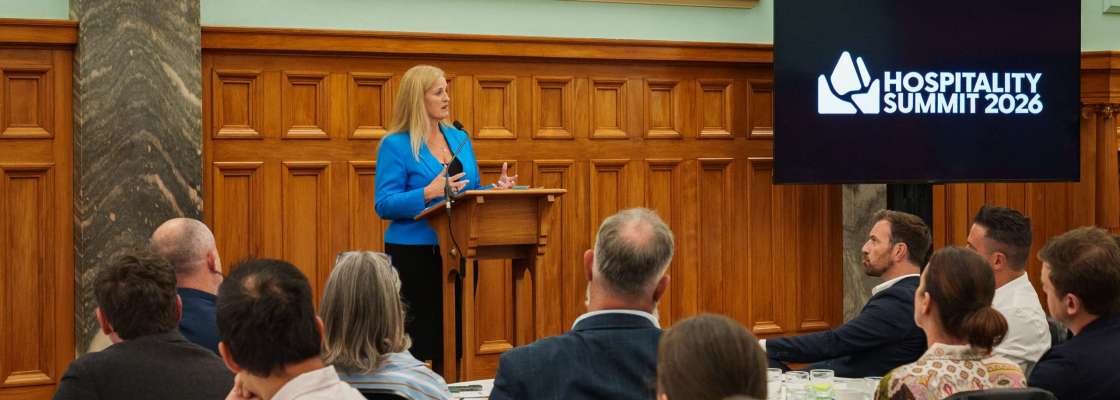
The Hospitality Summit 2026, held on 12 March brought our industry into the heart of Parliament — creating a direct line between hospitality businesses and the people shaping the policies that affect them.

Delivered by the Restaurant Association, in partnership with Hospitality New Zealand, the Summit is built on the idea that real progress happens when industry and Government sit at the same table, focused on solutions.

The Hospitality Summit is a working forum. We bring together 55 operators from across the country, alongside Ministers, officials, and agencies, to talk openly about what’s happening on the ground — what’s working, what’s not, and what needs to shift. The discussion focuses on solution.

It’s also about recognising the role hospitality plays, keeping the country humming, shaping the vibrancy of our communities and forming a core part of New Zealand’s identity.

That role is increasingly recognised at a Government level — not just as part of tourism, but as a sector with real further potential to drive growth, jobs, and regional development.

When we held the inaugural Hospitality Summit in 2024, the goal was to move beyond talking about issues, and into working through them together – industry and Government.

That approach has delivered.

From 64 recommendation from the first Summit, more than 20 are now either complete or well progressed. That includes movement on long-standing pressure points like regulation, alcohol licensing, Easter trading, and Holidays Act reform — as well as new initiatives like the hospitality data portal and sector-specific wellbeing resources.

We’ve also seen long-advocated opportunities gain traction — including the arrival of Michelin to New Zealand, which sends a strong signal internationally about the quality of our food and hospitality offering.

None of this has happened in isolation. Much of this progress “gathered pace from the engagement in the room” — from operators sharing real experiences, and from a more coordinated partnership with Government.

The strength of the Summit comes from who is in the room. Operators who are navigating the day-to-day realities of running a hospitality business — cost pressures, compliance, staffing, and shifting demand. People who understand where the friction points are, and where change would make a tangible difference.

Those perspectives are important – they ensure that discussions stay practical, and that the focus remains on removing barriers, unlocking growth, and creating an environment where businesses can succeed.

A defining feature of the Summit is the level of engagement from Government.

Ministers, MPs, and officials are part of the conversation — hearing directly from operators and working through the issues alongside us.

We also want to acknowledge the Minister for Tourism and Hospitality, Louise Upston, for her support in bringing the Summit together and for her ongoing commitment to engaging directly with the sector. That support has been instrumental in creating the space for these conversations to happen — and, importantly, for them to translate into action.

That support is critical. It creates a clearer pathway from problem to solution, and it’s helping to build momentum behind changes that have been needed for some time.

We are seeing a shared commitment to backing the sector — recognising that a stronger hospitality industry contributes directly to a stronger tourism offering, more vibrant communities, and a more resilient economy.

The Summit itself is just one part of the process.

What comes out of those discussions is captured and now shaped into a set of recommendations that we take forward as part of our advocacy. From there, the focus remains on delivery — continuing to work with Government to progress changes and track outcomes.

As we said on the day, what happens in that room has real consequences. And increasingly, we’re seeing those consequences play out in policy and progress.

The Hospitality Summit is now an established part of how we represent hospitality at a national level.

It gives the sector a clear, collective voice — and a direct role in shaping the settings that will support its future.

And as that partnership with Government continues to strengthen, so too does the opportunity to build momentum — and deliver the kind of change the industry has been calling for.


More information:

Shaping The Future of Hospitality: Industry Leaders Meet Government at Hospitality Summit

posted on

Hospitality industry leaders and Government representatives have gathered at Parliament this week for the 2026 Hospitality Summit to work together on solutions that will strengthen the future of the sector.

The Summit, hosted by Minister of Tourism and Hospitality, Hon Louise Upston, in conjunction
with Hospitality New Zealand (Hospitality NZ) and the Restaurant Association of New Zealand
(Restaurant Association), was held at Parliament buildings in Wellington yesterday – Thursday,
12 March 2026 – with more than 70 industry stakeholders and government officials in
attendance.

The Summit is the second of its kind. The inaugural Hospitality Summit, held in December 2024,
laid the groundwork for ongoing collaboration between the industry and government, and
provided an opportunity for the hospitality sector to help shape future government policies.
Priority areas for the hospitality industry were discussed and a comprehensive list of
recommendations were developed, covering data, immigration, licensing and compliance,
through to alcohol policy, employment, skills and training and the interaction between hospitality
and tourism.

This year’s focus was to take a look at the recommendations put forward at the last summit,
refresh and refine them and add any new priority areas the industry would like to see
improvements in.

Some of the key areas the hospitality representatives identified included licensing & compliance,
hospitality data and employment issues.

Speaking at the Summit, Tourism and Hospitality Minister, Hon. Louise Upston, acknowledged
the hard work and dedication of those in the industry and thanked them for their collaboration.
Minister Upston says: “The hospitality industry is vital to New Zealand and brings significant
vibrancy and value to New Zealand and, while distinct from tourism, also plays a key role in how
visitors experience our cities and towns. Hospitality plays a crucial role in our economy and
employment with 193,000 people directly employed in hospitality across New Zealand.

“It was a pleasure to host the industry at Parliament this week and make meaningful strides to
set hospitality up for success into the future. It is encouraging to see the industry working
together in such a collaborative way and I look forward to receiving the final recommendations
report.”

Hospitality NZ Chief Executive, Kristy Phillips says the Hospitality Summit provides a significant
opportunity for the hospitality industry. “The Summit provides a platform for open dialogue between government officials and industry stakeholders to address challenges our sector is facing and discuss ways in which change can be made so hospitality can thrive, not just now, but in generations to come.

“It’s been great to problem-solve together and create actionable steps that will strengthen the
future of the sector.” Restaurant Association General Manager, Nicola Waldren says: “Working collaboratively with Government and Hospitality NZ to address the critical challenges facing our sector is crucial to its success.

“It’s excellent to have everyone in the room together, finding ways to build momentum and
create meaningful impact for the hospitality industry.”

A recommendations report will be released in coming months, reflecting the discussions at
Summit and providing some clear next steps for supporting the industry.


More information:

Middle East Conflict: what it could mean for hospitality

posted on

When tensions escalate in the Middle East, New Zealand’s distance from the conflict doesn’t insulate us from the economic consequences. Rising fuel costs, shipping disruptions, and inflationary pressure are already being flagged by analysts — and hospitality businesses, with their tight margins and reliance on some imported goods, are particularly vulnerable.

New Zealand is heavily reliant on global supply chains. The Strait of Hormuz carries around a fifth of the world’s oil, and shipping lanes there have been largely suspended during the current conflict. One New Zealand logistics company has reported the equivalent of 4,000 cargo containers in transit in that trade lane, all affected by the disruption.

The impacts are not yet fully flowing through, but there are several areas to watch:

  • Fuel and energy costs — Rising petrol prices don’t just show up at the pump. They flow through the entire economy via transport costs and imported inputs, and higher business costs are likely to be passed on downstream.
  • Food costs – Shipping delays have a ripple effect on ingredient and supply costs. The primary concern is not production, but the halting, or slowing, of shipments, which could suppress imports for weeks. Grain and wheat-based products, sugar, and some vegetables may also be affected, as the Middle East is the world’s largest producing and exporting region of sulphur, a key ingredient in fertilisers used for these crops. For hospitality businesses already managing tight margins, even modest increases across multiple ingredients can add up quickly.
  • Inflation — A sustained rise in oil prices would likely add further pressure to annual inflation, at a time when many hospitality businesses are still recovering from several years of difficult trading conditions.
  • Consumer spending — If household budgets tighten as a result of higher fuel and living costs, discretionary spending — including dining out — may soften.

The conflict also has implications for inbound tourism, and the picture is mixed. In the short term, the closure of key gateway airports such as Dubai and Doha is disrupting flight routes into New Zealand, and some travellers may remain reluctant to travel through the region even once the conflict eases.

However, there is a potential upside. With the impacts of the conflict being keenly felt on the other side of the world, travellers are looking elsewhere — and New Zealand’s reputation as a safe, welcoming, destination could work in our favour. European carriers are already shifting capacity toward alternative long-haul routes, and there is an opportunity for New Zealand to attract visitors who may have otherwise headed to the region.

For hospitality businesses, it’s worth keeping this in mind when thinking about marketing and capacity planning over the coming months. If inbound visitor numbers do increase what will that mean for your business?

The situation is still developing and the full impact on New Zealand remains uncertain. It’s worth keeping an eye on your key supply costs over the coming weeks and factoring potential price increases into your forward planning where you can.


Further information:

MFAT has published analysis on the trade and economic implications of the conflict, which is worth reading.

Further reporting from RNZ and the NZ Herald also provides useful context.

Immigration changes put key hospitality roles on the Amber list

posted on

Immigration New Zealand has announced further details on changes to the Skilled Migrant Category (SMC), taking effect from late August 2026.

For hospitality businesses that employ — or plan to recruit — migrant workers, the news is not particularly welcome. Several key hospitality roles have been placed on the amber list, meaning migrants in these positions will face additional requirements on their pathway to residence.

For hospitality businesses that employ — or plan to recruit — migrant workers, the news is not particularly welcome. Several key hospitality roles have been placed on the amber list, meaning migrants in these positions will face additional requirements on their pathway to residence.

What is the Skilled Migrant Category?

The SMC is New Zealand’s main residence pathway for skilled migrants. In September 2025, the Government announced a series of changes designed to help employers retain skilled workers and support long-term economic growth. The latest announcement confirms the finer details of how those changes will work in practice.

The Amber List — Hospitality roles

One of the more significant changes for the hospitality sector is the introduction of red and amber occupation lists. Several hospitality roles have been placed on the amber list, including:

  • Café/restaurant manager
  • Chef
  • Baker
  • Pastrycook
  • Hotel or Motel Manager
  • Hotel Service Manager
  • Accommodation and Hospitality Manager
  • Bed and Breakfast Operator
  • Caravan Park and Camping Ground Manager

Migrants working in amber list occupations are still eligible for residence, but face additional requirements under the new Skilled Work Experience pathway. Specifically, they must have at least five years of relevant eligible work experience in New Zealand, including two years earning at least 1.2 times the SMC median wage.

Amber list occupations are still eligible under the existing SMC pathway if the migrant earns at least 1.5 times the SMC median wage, holds a Bachelor’s qualification or above, or holds a recognised occupational registration.

The amber list was determined based on evidence of historic immigration risk, including indicators of role inflation and immigration fraud. Immigration New Zealand has noted these lists will be reviewed regularly.

Other key changes

Beyond the occupation lists, there are several other changes to note:

  • Wage thresholds: Migrants will only need to meet the SMC median wage in effect when they start gaining skilled work experience, rather than meeting a potentially higher threshold at the time of application.
  • Qualification points: From August 2026, qualifications completed in New Zealand will attract one additional point compared to equivalent overseas qualifications.
  • English language tests: For applicants holding a recognised occupational registration, English language test results will be valid for five years.
  • AEWV extension: From 2027, migrants who need up to 12 additional months of skilled work experience will be able to apply to extend their Accredited Employer Work Visa to meet SMC requirements.

What should employers do?

If your business employs migrant workers in any of the roles listed above, it is worth familiarising yourself with the new requirements ahead of the August 2026 changes. We recommend speaking with a licensed immigration adviser if you have specific questions about how these changes may affect your employees.


For full details, visit the Immigration New Zealand website.

Simply Safe and Suitable Record-Keeping Templates Refreshed

posted on

If your business uses the Simply Safe and Suitable food safety programme, you’ll be pleased to know that New Zealand Food Safety has refreshed its record-keeping templates — and your recording requirements haven’t changed. The refresh is about making things easier for you.

The updated templates are now available in Word and Excel formats, giving you more flexibility to adapt them to suit your business needs. A new Record Keeping Guidance document has also been created to support you, which includes:

  • A full list of record requirements
  • Examples of completed records
  • Different ways you can keep records

The refresh also includes several new record blanks:

  • Opening and closing checks
  • Internal audit and verification
  • Thermometer checks and calibration
  • Daily cleaning tasks
  • Biltong records

The refreshed templates are available in the following formats:

Hospitality ends 2025 on a cautious high

posted on

Fourth quarter sales results showed that hospitality closed out 2025 with the strongest quarterly result of the year.

National sales reached $4.43 billion in the fourth quarter of 2025 — a 4.2 per cent increase on the same period in 2024, and a $176 million lift in dollar terms. For the full year, the industry recorded $16.4 billion in sales. 2025 has been described as one of the hardest years on record for operators, so the direction of travel at the end of the year is at least moving the right way. This is not to discount the reality that the cost of running a hospitality business has not eased in any meaningful way — stronger sales in quarter four have largely been met by stronger outgoings.

Cafes and Restaurants lead the way

The café and restaurant sector was the standout performer in the fourth quarter sales results, generating $2.18 billion in sales for the quarter — a 5.1 per cent year-on-year increase that gave the sector a 49.3 per cent share of total industry revenue. Crucially, it was the second consecutive quarter of strengthening results, following 7.3 per cent growth in Q3.

Catering services also had a strong quarter, up 11.3 per cent, as corporate and event bookings continue to recover. Pubs, taverns and bars improved on a flat Q3 result with 3.7 per cent growth, though beverage-led operations continue to find it harder going than food-focused businesses — a pattern that has persisted throughout much of the past year.

Hospitality clubs grew 6.5 per cent year-on-year, while takeaway and food-to-go — one of the industry’s more consistent performers in recent years — recorded a notably subdued result, up just 0.4 per cent. That may partly reflect seasonal patterns, with consumers opting to dine out over the Christmas period rather than ordering in. But it may also signal something more structural: that customers who migrated to takeaway during leaner times is beginning to return to restaurants and cafés.

Regional results = mixed

The regional picture tells markedly different stories:

Queenstown-Lakes had an exceptional summer, posting 17.9 per cent growth year-on-year — the strongest regional result in the country. Sales climbed from $133.6 million in Q4 2024 to $157.5 million, reflecting the continued strength of domestic and international tourism in the region.

Wellington recorded solid 7.2 per cent growth, reaching $459.7 million for the quarter — a meaningful turnaround that positions the capital as one of the clearer recovery stories of the quarter.

Canterbury (excluding Kaikōura) was another strong performer, up 9.2 per cent to $574.1 million, while Manawatū-Whanganui recorded 9.4 per cent growth to reach $165.7 million — both regions building on momentum from earlier in the year.

Auckland, which accounts for nearly 40 per cent of national sales, recorded more subdued sales results. After a strong 7.1 per cent year-on-year increase in Q3, growth slowed sharply to just 1.9 per cent in Q4, with total sales of $1.74 billion. In a market where operating costs have risen well beyond that rate, many operators on the ground will have found the result underwhelming.

Not all regions recorded growth at all. Gisborne declined 8.4 per cent year-on-year, West Coast fell 3.7 per cent, and Nelson dropped 6.1 per cent — though for Nelson, this likely reflects a correction following an unusually strong 2024 rather than a deteriorating underlying market.

Smaller regions showed mixed fortunes: Taranaki grew 5.9 per cent, Marlborough was up 6.3 per cent, and Southland posted 4.1 per cent growth, while Bay of Plenty and Otago (excluding Queenstown) recorded more modest gains of under 2 per cent.

What lies ahead

Sustained cost pressure, sluggish consumer spending, and gruelling trading conditions defined 2025 for most operators. The fourth quarter offers early signs that the environment may be shifting — but few are expecting a rapid return to easier conditions.

The opportunity in 2026 lies in steady momentum — spending lifting gradually, tourism continuing to strengthen, and the ability to make measured decisions again.

The regulatory environment remains a factor, with ongoing compliance changes creating uncertainty for operators trying to plan ahead. Stability and predictability will be essential to rebuilding confidence and enabling investment.

What Q1 2026 sales results will reveal — particularly whether the takeaway-to-dine-in shift is a genuine trend, and whether Auckland can recover its earlier momentum — will be closely monitored across the industry. The year ahead may still require caution, but it also presents an opportunity to invest in the foundations that will support long-term success.


Source: Restaurant Association of New Zealand / Statistics New Zealand, Hospitality Sales Snapshot Q4 2025.

View more trends and research here.

A new partnership to fuel Aotearoa’s hospitality industry

posted on

We’re excited to announce a new partnership with Goodman Fielder Foodservice NZ, a collaboration designed to strengthen, support and celebrate Aotearoa’s hospitality industry.

Goodman Fielder is home to a portfolio of iconic local and international brands spanning multiple food categories, appealing to every corner of the industry. Whether you run a local bakery, bustling café, restaurant or hotel, you’ll find high-quality ingredients and solutions you and your customers will love.

They boast a range of brands such as; Meadow Fresh, Puhoi Valley, Simply, Fortune, Vogel’s and Nature’s Fresh just to name a few. Whether you’re looking for fresh white milk, yoghurt, cultured products, cheese, flour, oil or rice, they’ve got you covered.

With 12 manufacturing sites across New Zealand, they ensure the freshest possible products reach Foodservice and hospitality customers nationwide.

Discover the full Goodman Fielder Foodservice range, browse recipes or explore product inspiration at
gffoodservice.co.nz.

Your RA membership could be saving you money on every transaction

posted on

westpac

Westpac Get Paid is a suite of payment solutions that allows businesses to accept card payments in-store, online, and over the phone. It includes a range of EFTPOS terminals for physical locations and online solutions for website shopping carts, virtual terminals for mail orders,and payment links that can be sent via email.

As a Restaurant Association of New Zealand member, you could benefit from preferential Westpac merchant rates. Customers who have a Westpac settlement account and are a Restaurant Association of New Zealand member can receive the lower rate.

To find out more, call the Westpac Merchant specialist team on 0800 888 066 or apply online here.

Westpac terms and conditions including Westpac’s General Terms and Conditions apply to Westpac’s products, services and rates. Westpac reserves the right to review and amend these benefits at any time. A preferential merchant rate is a discount on our Interchange Plus rate.


Find out more about Westpac’s offers for Restaurant Association members here.

Gift card and voucher legislation – changes to expiry dates from 16 March

posted on

Quick view:

  • New legislation requiring gift cards / vouchers to have a minimum expiry date of three years comes into force on 16 March.
  • The Fair Trading (Gift Card Expiry) Amendment Act has amended the Fair Trading Act.

Recent legislative changes impact how you manage gift cards and vouchers in your restaurant or café.

The key updates that take effect from 16 March 2026 under the Fair Trading (Gift Card Expiry) Amendment Act 2024.

What’s Changing?

1. Minimum expiry period

Gift cards and vouchers sold to your customers must have a minimum expiry period of 3 years from the date of sale. Any term or condition that sets a shorter expiry period is invalid, and the law will automatically treat the expiry date as 3 years from the date of purchase.

2. Prominent display of expiry information

Certain information must be prominently displayed on all gift cards and vouchers. This can be done by stating one of the following:

  • The expiry date
  • The month and year the card is no longer redeemable
  • The date of sale along with the period during which the card is redeemable
  • The words “no expiry date” (or words to that effect)

3. What counts as a gift card?

The Fair Trading Act broadly defines a gift card as any card or voucher — physical or digital — redeemable for goods or services. However, the Act excludes some types of cards from these requirements, including:

  • Prepaid cards redeemable only for telecommunications, public transport, or utility services
  • Cards issued as part of a customer loyalty programme (unless purchased using loyalty points)
  • Cards redeemable only at a time-limited event (e.g. a festival or concert)
  • Cards sold principally for charitable fundraising purposes

When do the changes come into effect?

The new requirements apply to gift cards sold from 16 March 2026 onwards. The rules are not retrospective — any gift card issued before this date retains its original expiry date.

What are the consequences of non-compliance?

Failure to comply with the gift card expiry requirements is a breach of the Fair Trading Act. The Commerce Commission may issue infringement notices of up to $1,000 per offence. For serious non-compliance, companies may be fined up to $30,000 per offence, and individuals up to $10,000 per offence.

Steps to take by 16 March 2026

  • Review your gift card terms and conditions to ensure expiry periods meet the 3-year minimum
  • Update card designs or digital systems to prominently display expiry information
  • Train staff on the new requirements
  • Sell through existing non-compliant stock before the deadline

For more information