
Savour
The Magazine of the Restaurant Association of New Zealand
Why Some Owners Scale, and Others Stall
6 Oct 26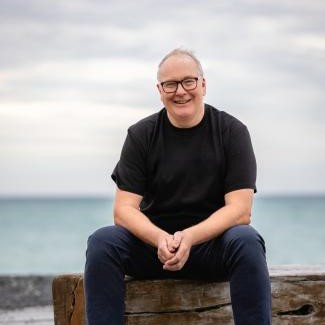
By John Hutchinson, Plan A Consulting
Most owners don’t stall because they lack ambition, they stall because they try to carry everything themselves. I’ve been that person!
After more than 15 years+ working alongside owner led businesses, I have seen this pattern repeatedly. The businesses that scale profitably are not led by the most charismatic personalities, they’re led by disciplined leaders.
That is what Jim Collins described in Good to Great as Level 5 leadership, ‘Humility, combined with fierce professional will’.
Let me tell you about a business owner I’ve been working with for five or so years who reflects much of this in practice.
They have more opportunity than capacity
This business doesn’t suffer from a lack of opportunity.
There always seems to be new markets, new ventures, new capability, new ideas for them to look at.
The risk at this stage isn’t lack of work, it’s distraction. Sometimes there can be too many ideas on the table that takes the focus away from business as usual.
Instead of chasing everything though, they’ve learnt to ‘fire bullets before cannonballs’ (Collin’s phrase). Small tests, controlled investment, prove the economics first, then scale or dismiss the idea. They’ve learnt to ‘fail fast’.
That discipline has protected margin and preserved momentum and scaling for them is not about doing more, it’s about choosing better.
Willing to have the hard conversations
Leadership is not just about vision either, it’s about standards, the boring day to day stuff.
For them, when performance drops, it’s addressed. When behaviour’s off, it’s challenged and when strategy needs refining, it’s debated. They’re more than happy to get pushed back on and change their thinking.
Not emotionally, or dramatically but directly in a very respectful but business-like way. They used to be timid about having those conversations, but they’ve got better over time.
Because here’s what they’ve learnt, avoided conversations compound. Things tend to escalate, so having those early chats where folk might disagree builds strength.
For them it’s not so much about being right, but getting clarity and that builds trust. Trust then builds performance.
Building leaders, not just revenue
Over the past five years we’ve worked together, the real shift hasn’t just been turnover, although growth has been big, it’s been capability as well.
The focus moved from building the business around them to building leaders within the business.
Delegating meaningful decisions, coaching instead of rescuing, holding standards consistently and allowing others to own outcomes.
If every decision still routes back to the business owner, they are limited for scale. Build leadership and you’ll find that multiplication removes that ceiling.
Has it always gone well? Of course not, but that’s not a reason to stop trying.
Support at the top
They don’t try to carry it alone. There is structured advisory process in place at a board level and a good group of senior leaders supporting them.
Those senior leaders are also supported externally to help them grow and develop as leaders.
Strategy is tested, assumptions are challenged, blind spots are surfaced early and priorities are clarified.
This isn’t about advice once a year, it’s about ongoing discipline.
Leadership development doesn’t happen by accident, it happens when there is rhythm, accountability, and honest external perspective.
That’s a core part of the work we do with business leaders.
Not theory but structured conversations, clear priorities, honest questions and consistent follow through.
That is often the difference between scaling and stalling.
But I’m only a small business
You don’t need a large team or a board of directors to benefit from good leadership and outside support.
You might have fewer than 10 staff (like a majority of SMBs), with most decisions still landing on your desk. The principles still apply.
Have someone to challenge your thinking, test your assumptions, help you choose what matters most and hold you accountable for following through.
That could start with a regular conversation focused on three questions:
- What are we trying to achieve?
- What’s getting in the way?
- Who’s doing what by when?
The value comes from making it a habit, then reviewing what’s actually happened.
That’s a core part of how we think at PlanA. Practical conversations, clear priorities and consistent follow-through.
You don’t have to be a big business to put good habits in place.
Who helps you step back and think about yours?
A question for you
If you’re in a leadership role right now, ask yourself:
- Are you building leaders or building dependency?
- Are you disciplined with opportunity, or distracted by it?
- Do you confront reality early?
- Do you have structured support at the top?
Because scaling a business is rarely about working harder, it’s about leading better.
Final thoughts
It’s easy to admire disciplined leadership in hindsight. It always looks so easy from the outside.
In real time though, pressure makes control feel safer. Quick wins feel attractive and doing it yourself feels faster. I’m sure we’ve all said it’s quicker for us to do something than show someone else.
I reckon though the difference is the willingness to step back, invite challenge, and build leadership beyond yourself.
I realise that’s uncomfortable sometimes, but building your own leadership capability and those of your team is what builds something that lasts.
If you want to know more about how we help you build that discipline and capability inside your business which allows the business to scale, send me a DM and we can have a chat. The size of your business is irrelevant.
Find out more
John Hutchinson is a seasoned business advisor with over 25 years of experience spanning both business ownership and independent consulting. Having built and run his own businesses, he brings a grounded, practical perspective to his advisory work, helping small and medium-sized businesses improve their governance, strategy, and execution. For more than 15 years, he has worked as an independent advisor across a diverse range of industries — including retail, manufacturing, technology, health, franchising, and professional services — giving him a broad cross-industry lens that he applies to help business owners navigate growth challenges. John is known for his ability to simplify complexity and bring clarity, structure, and accountability to the businesses he works with, ultimately driving better decision-making and stronger profitability.
 Member only content
 Member only content
Savour is proudly brought to you by

-
Let’s Feed the Future of Tourism by Telling New Zealand’s Food Story
-
7 Essential Strategies for Maximizing Staff Retention in the Hospitality Industry
-
Checking it Twice – Health and Safety Considerations for your Work Function
-
Why the hospitality industry supports a return to the office
-
Surviving Financial Strain: Restructuring Strategies for NZ Hospitality Employers
-
Rent Reviews Unveiled: The Ultimate Guide for Hospitality Tenants
-
The Vital Role of Reputation Management in the Hospitality Industry