Getting your workplace ready for the vaccination rollout
posted on
Restaurant Association Vaccine Policy and Guide Released.
As the Government rolls out its COvid-19 vaccination programme across New Zealand it is worth considering having a vaccination policy in place. As part of this, you may wish to start engaging with your employees early and constructively when considering vaccination issues in the workplace.
Employers are not able to compel employees to be vaccinated, and it may very well be that employees refuse to receive a vaccination for a variety of personal reasons. However, you can strongly encourage workers to be vaccinated for health and safety reasons. If an employer can make it easy and positive for employees, then employees are much more likely to agree to the vaccination.
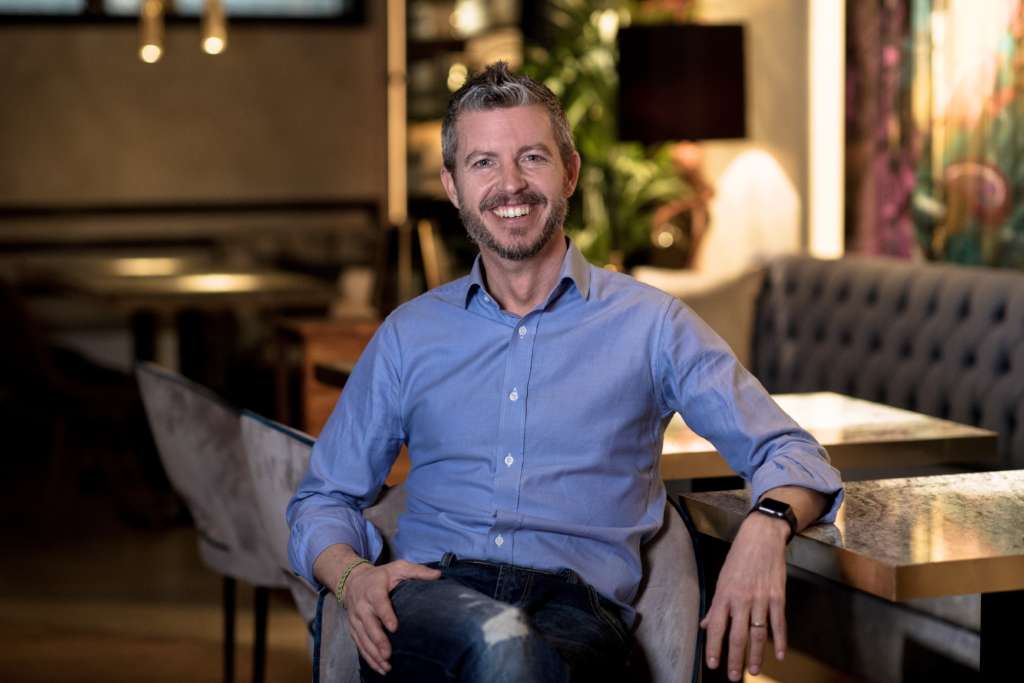
Benjamin Calleja – International Restaurant Consultant – livit.com
At last year’s Food Hui, due to the current border closure, keynote speaker, Benjamin Calleja, joined the main auditorium for his presentation via the big screen. His presentation was insightful as much as it was thought-provoking and left many with more questions than answers. From his home in Sweden, we spoke with Benjamin again to go more in depth on some of his thoughts, details, and questions from the audience.
Benjamin is CEO and Founder of Livit, one of the world’s largest hospitality design companies focusing on improving f&b brand performance through guest experience design. Active in 40 countries, over five continents, on average a Livit-designed restaurant opens every eight hours somewhere in the world. Benjamin holds two Master of Architecture degrees and is considered an international expert in the area of hospitality design and technology. He is also a member of the American Institute of Architects and a Registered Architect in Germany, France, Italy, UK, Spain, Luxembourg, and Sweden.
Ben was a speaker at many conferences worldwide before the pandemic, including at the North American National Restaurant Association conference where his presentation caught the eye of our own Association President, Mike Egan. His insights into how to use technology to deliver a highly customised dining experience take thought-provoking, modern marketing theory to the extreme. They utilise adaptive lighting, music, even scents to encourage diners to spend more and return often.
Q&A with Ben Calleja
Attendees of Food Hui had noted how extravagant some of the designs were and wanted to know how long it had taken to get a return on his investments. Ben was upfront about his financials and stated that his investments often pay themselves back in less than a year, as he uses a finance structure to reduce risk. With top-line revenue of $3 million USD, these figures are quite amazing; his venues look astounding.
Your venues all seem to be in high population areas. Do you think these tactics would work in less dense areas?
We recently opened in Malmö, Sweden, which has 300,000 people, making it the least populated city we have opened in. There is a lot of immigration, and lower incomes, yet it’s among the most profitable of our restaurants. So, yes, this model can be scalable. The value equation of getting great experience at affordable places is more important in less populated areas where income is tighter, so the value seekers are a bigger part of the population. Definitely worth looking at opening in second or third tier cities.
The model we run, and now franchise, is important from a supply chain perspective. It is important to have high quality, not only in experience but great quality products. As an example, when making a truffle pizza, most pizza places in the area use truffle oil, whereas we use actual black truffle on the pizza and it’s our most expensive item at $16 (USD). So, you can still get a great value product and great value experience that’s affordable or perceived as so. It’s all about operational efficiency and labour; not cutting corners on quality, just reinventing and rethinking how restaurants are operated.
As a consultant have you ever advocated for profit sharing incentives for staff?
Yes, we have it in the company. There’s always profit sharing on the results of the company and we have it on three tiers: company, departments and personal shares. There’s an incentive plan on all three levels but the profit side is the biggest incentive.
Do you have a key indicator that lets you know if a venue is working well or not (or maybe a few?)
You can break down a restaurant P&L into quite basic indicators. If you want to have a solid profitable concept store, your food cost should be 23-26% and your labour costs should be 24-28%. If you are high touch, you could go to 30% labour but be careful anything that surpasses 30% labour and 25% on the food side. You need to nail that because rent is rent and the higher the rent, the higher your top line of revenue will be. If you can do that, you’ll have a very solid business. I encourage everyone to look back into metrics.
I really like a metric called guest per labour hour. What you do is take all labour hours, including opening and cleaning, and divide by your number of guests. Traditional casual dining has been around 1.9 – 2.1 guests per labour hour. We’re operating over five per labour hour. That gives you a spectrum of where the industry was and those brands that are now suffering, versus a really efficient model. Our peaks were up to seven per labour hour. That’s extraordinary, but that is a very interesting metric because it does not depend on your average ticket. Dollars per labour hour is the norm, but the guest per labour metric is great and I encourage everyone to look at it.
What do you think the future holds for the industry, and what has your home country, Sweden, been like through the pandemic? Do you have or predict any ‘silver linings’ from Covid-19 for the hospo industry?
I’m a positive guy, so yes, based on research we are predicting a really solid comeback – almost like the 30s or almost every post-war era. We’re social animals, we’re tired of being at home. The reopening after a strong lockdown showed sales went through the roof: sales were higher than the year before. What is hard to predict is when, and it will vary. We definitely predict a strong comeback in the industry.
Pair that with a lot of restaurants that are not reopening, or will not reopen, and there’s going to be a pent-up demand. The brands and concepts that have survived have proven that they can be lean and operate differently. They will now have much more growth, more opportunities, cheaper, more available real estate, which was a challenge in a lot of markets. Unfortunately, a lot of restaurants won’t make it, but for those that do, they’ll have a golden era in the coming two or three years.
One thing that we follow is travel reservations; they are a great way to measure consumer sentiment and we’ve seen huge spikes in people booking flights for July and August, when people expect to get out. Following that trend is a great indicator.
We understand Sweden didn’t go for a lockdown approach for Covid-19. How has your hospitality scene survived?
Sweden took a completely different path at the beginning of the pandemic: no lockdown and face masks were optional. Restaurants have been trading, but it’s been an up and down rollercoaster. Some of our places were down 80% in May/June and then they went up to 50/60% on pre-Covid sales and then down again. We have almost been following the ways of Covid. Interestingly enough, it has allowed team members to stay on the payroll because the government implemented a good incentive plan, whereas other European countries went into lockdown and people lost jobs. Traditional hospitality has suffered a lot and we have seen a lot of closures, especially since Christmas.
We have been able to be cashflow positive. At the bottom of the pandemic, we were able to trade with only 13 labour hours. That includes opening to closing and cleaning. One team member would run the restaurant on the floor with occasional support from one other team members when needed.
Did the governments approach work well?
It’s a hard balance. Sweden didn’t go into lockdown and has had higher death rates than our neighbours. It’s tough as a politician: is it lives or the economy? There is no recipe book for this. Maybe in a year or two we can look back and see if it was right. As a citizen, it has been a pleasure living in Sweden as we lived our normal lives.
Do you have any predictions for food trends that interest you for 2021?
I see an explosion of anything off-premises – dark, virtual, cloud, call it whatever you want. It’s exploding not only in our industry, but also the hotel industry. We are doing tons of virtual brands and concepts. Understanding that ecosystem is one trend that is going to be accelerated in 2021, because a lot of brands started in q3/q4 of 2020 and they’re going to rollout in 2021.
When things start as a trend, it is an experience, I think. There’s also consumer sentiment: you can only have x number of weeks at the drive-through, ultimately you want to go out for a couple of drinks and enjoy yourself and socialise. Venues high on the experiential side will have a lot of potential.
Those suffering will be the ones that were already starting to suffer: the traditional casual dining experiences that were not good on the experience, very generic and not very specialised on the food product. Big global brands will struggle more.
On the quick service restaurant side, we’re expecting a huge boom from taking advantage of real estate. Quick service restaurant concepts will still grow. We’re investing heavily in new openings and looking into modules that are now being designed as solely off premise, drive-throughs.
Food side we see incremental growth of plant-based concepts. ‘Healthy, good for you’ is going to grow and the other side of the spectrum is ‘pure indulgence’ – monster shakes and lots of calories.
The real estate, concept side and food sides are polarising, and the ones in the middle will be the ones that struggle the most. Convenience and experience are going to be the winners.
We’ve started to franchise internationally, and I truly believe New Zealand could be a really interesting market, so if anyone is interested in partnering, we would love to have a discussion!
This article & so much more was in the March edition of Savour magazine, the Restaurant Associations quarterly industry publication.
Letter to the Minister for COVID-19 Response – Urgent review of Level guidance required
posted on
5 o Poutū-te-rangi 2021 Hon Chris Hipkins Minister for COVID-19 Response Executive Wing 6.3 Parliament Buildings [email protected]
Kei te rangatira, tēnā koe
We have all been dealing with COVID-19 for over a year now. In that time I have made the case, a number of times, to Ministers to show leadership for hospitality and work with us to improve the Government’s response to better support our struggling sector: to keep businesses open, workers in jobs, and livelihoods intact.
When the Government’s Alert Level guidance was first mooted in March 2020, the Government said our initial month long lockdown was needed to ‘flatten the curve’. In her 21 March 2020 address to the nation, the Prime Minister told us “Alert Level Three is where the disease is increasingly difficult to contain. This is where we restrict our contact by stepping things up again. We close public venues and ask non-essential businesses to close.”
During Auckland’s most recent double lockdowns, I have spent time reflecting on these words: “the disease is increasingly difficult to contain.” Like many business leaders, I am not convinced the Alert Level settings, which were put in place a year ago, are fit for purpose for what we know now.
At the inception of these guidelines, there was much made about essential versus nonessential businesses, with commentary levelled at our sector that we could be a hot-bed for COVID-19 spreading throughout households via prepared food. In a year, this has not come to pass once.
While the rest of the country has been able to get used to working from home, a handful of sectors remain completely and utterly hamstrung by the current alert level settings in place. These sectors – hospitality, events sector, beauty therapy, hairdressing, tourism and some retail – are all sectors that require kanohi ki te kanohi (face to face) to turn a dollar. We are the sectors where working from home doesn’t work.
I raised this in a meeting with the Treasury back in September 2020, recommending the Government look into creating specific, sector-led alert level guidance that could be called upon in the event the country goes back up alert levels. Treasury asked what this would look like in practice, so we made draft guidance for hospitality and submitted it in November. A copy of our Draft COVID-19 Alert Level Guidance Update – Hospitality Specific is attached.
I remain concerned that the Alert Level guidance has not been updated since its creation: there needs to be acknowledgement that in their current form, the settings decimate particular industries. There is no doubt the alert level system is a useful tool, however if we are going to stick with it, it needs urgent updating.
We recommend sector-specific alert level guidance that addresses both operational and fiscal changes that could be ‘triggered’ each time there is an alert level change. This kind of guidance provides much needed certainty, and is the kind of initiative that could have been spearheaded by the Government over the past several months
I cannot help but reflect that the current alert level settings disrupt small businesses in the services sector more so than any other industry. Let’s work together to review these settings and ensure they are working for as many businesses as possible.
Hospitality operations have no ability to trade at Alert Level 4 and limited opportunity at Level 3 – working from home is not an option. Currently, the level of restrictions required at Level 2 adds layers of cost and compliance that further limits the ability to trade profitably.
I am asking the Government to turn its collective mind to those few industries that remain immobilised by the current alert level guidance. We have done the heavy lifting for sector-specific change work, and we are asking for officials to engage with us. We must chart a course for improvement because improvement to the alert level guidance is necessary for business survival.
Ngā mihi nui,
Marisa Bidois Tāhūhū Rangapū (Chief Executive) Restaurant Association of New Zealand
Attachments:
Draft Updated COVID-19 Alert Level Guidance – Hospitality Specific